Motor Trends named the Subaru Forester 2009 Sport Utility of the Year (see bottom video below). Because of its four wheel drive and reasonable price ($31,000 fully loaded) the Forester is a good choice for a second car in the Catskills, where winding mountain roads and snowy winters are the norm. For instance, my 1991 Ford Probe was unable to go up Overlook Mountain back in the winter of '98 (it couldn't get traction about half way up) and my Lexus went into anti-skid mode going downhill on the curvy Boiceville end of Piney Point Road last winter. Plus, the Forester's ample rear cargo room is ideal for hauling trash, lawn products from the hardware store and other artifacts of rural life.
But there is a problem: the Subaru "love" commercials. A friend in Olivebridge, which is Subaru country (as is my neighboring West Shokan) points out that mainly left wingers, diesel dykes, people with bumper stickers that read "Women's Writers' Conference", transvestites in tu tus and hippies drive Subarus. My friend takes issue with my buying a Subaru seeing that I view Republicans as a big government party and consider Democrats the party of Karl Marx. See the two commercials below. Clearly, the Subaru love theme is problematic. The Subaru is a car for vegetarians, not high cholesterol types like me.
After my friend made this observation I began checking out Subaru drivers. They are passive-aggressive. Left (never right) turns in busy intersections; speeding up when you try to pass them on the NYS Thruway; erratic stops in the Village of Woodstock. Passive-aggressive driving is characteristic of leftists, who are tolerant of all values and will lynch you if you disagree. Equally, left-wingers are plain bad drivers as any drive through Woodstock will confirm. The recognition that Subaru drivers are passive aggressive supports my friend's claim that they are tu tu clad granola crunchers as well.
But this argument leads me to the best reason to buy a Subaru. It is the perfect undercover vehicle. I can go to Woodstock, park in the lot behind the Houst hardware store, load up on rock salt, and no one will break my window. Or, I can attend an Obama rally and everyone will think I'm really a supporter. Or visit the farmer's market in Woodstock. Or the next Arlo Guthrie concert in Bel Ayre. An undercover vehicle has many uses around here. Contrast that with a red Porsche.
The Subaru Forester is the perfect undercover car.
Tuesday, September 7, 2010


Conversation with Contrairimairi about Failure of GOP
Me:
Unfortunately here in New York the GOP is decidedly socialist and no change is in sight despite the Tea Party. The Tea Party itself is confused. There is little hope of progress here, the state will continue to decline until the economy collapses.
Mairi:
I've been following your postings about the goings on there. I am not certain that we CAN take America back in 2010 or 2012. There are so many "progressives" entrenched in both parties, that I think weeding them out is almost hopeless. The strong contenders here in Illinois are "progressives" even though running under the "R" banner. It's a joke, and it's HORRIFYING! People here are claiming they will not vote for anyone but a "D" or an "R", and it's looking like any "extra party" contenders will be thrown off the ballot here anyway. There are "suspicious" claims by the same two individuals challenging their signature petitions. If you remember, that's how BO won here in the past.
The candidate I was previously working for won entry to the ballot for an underdog, but the challenges, even if unfounded, seem to be "SOP" and moving forward regardless of the evidence to keep other contenders ON the ballot.
If we are afforded the possibility of electing only candidates from either major party who are still hell-bent on destroying the Constitution, what's the gain? Pelosi or Pelosi-light. Either way, the Constitution is still under a major assault that I am not certain we can rebuff in time.
GOD Bless,
Mairi
P.S. - One small bit of good news, it has been found out that Gillibrand accepted donations from a man who has sent contributions to hamas. (He has also contributed to the GZM.) She is claiming to have no knowledge, and promising to "look into the matter", but this will NOT be good news for her!
Me:
All of the GOP bloggers I have been hanging out with for the past 5 years are turning out to be party hacks, loyal to Rick Lazio who accepted a bonus for securing $25 billion in bailout money for JP Morgan. I'm asking Larwyn to take me off her mailing list. I consider Republicans to be no different from Democrats. The Republicans are more anti-freedom than the Democrats.
Unfortunately here in New York the GOP is decidedly socialist and no change is in sight despite the Tea Party. The Tea Party itself is confused. There is little hope of progress here, the state will continue to decline until the economy collapses.
Mairi:
I've been following your postings about the goings on there. I am not certain that we CAN take America back in 2010 or 2012. There are so many "progressives" entrenched in both parties, that I think weeding them out is almost hopeless. The strong contenders here in Illinois are "progressives" even though running under the "R" banner. It's a joke, and it's HORRIFYING! People here are claiming they will not vote for anyone but a "D" or an "R", and it's looking like any "extra party" contenders will be thrown off the ballot here anyway. There are "suspicious" claims by the same two individuals challenging their signature petitions. If you remember, that's how BO won here in the past.
The candidate I was previously working for won entry to the ballot for an underdog, but the challenges, even if unfounded, seem to be "SOP" and moving forward regardless of the evidence to keep other contenders ON the ballot.
If we are afforded the possibility of electing only candidates from either major party who are still hell-bent on destroying the Constitution, what's the gain? Pelosi or Pelosi-light. Either way, the Constitution is still under a major assault that I am not certain we can rebuff in time.
GOD Bless,
Mairi
P.S. - One small bit of good news, it has been found out that Gillibrand accepted donations from a man who has sent contributions to hamas. (He has also contributed to the GZM.) She is claiming to have no knowledge, and promising to "look into the matter", but this will NOT be good news for her!
Me:
All of the GOP bloggers I have been hanging out with for the past 5 years are turning out to be party hacks, loyal to Rick Lazio who accepted a bonus for securing $25 billion in bailout money for JP Morgan. I'm asking Larwyn to take me off her mailing list. I consider Republicans to be no different from Democrats. The Republicans are more anti-freedom than the Democrats.
New York City Tea Party to Rename Itself King George Tea Tax Party in Honor of Rick Lazio
The Tea Party movement was started by Ron Paul and his followers. It was then adopted and perhaps coopted by a wide range of Republicans, many of whom have not thought very much about what they belive, or who are dupes of economic royalists, those who would have supported King George on December 16, 1773. Nowhere is the confusion more evident than among those Republicans who claim to be members of a "tea party" but who support a candidate like Rick Lazio, a lobbyist for JP Morgan who oversaw the transfer of $25 billion from the public purse to the private pockets of JP Morgan's incompetent, morally depraved executives.
The royalist, pro Rick Lazio Tea Party movement should consider renaming itself the King George Tea Tax movement. Supporters of the bailout are advocates of higher taxes, more regulation, more corruption and the kind of insane public policies that King George favored.
The royalist, pro Rick Lazio Tea Party movement should consider renaming itself the King George Tea Tax movement. Supporters of the bailout are advocates of higher taxes, more regulation, more corruption and the kind of insane public policies that King George favored.
How Embarrassing for the New York Times
The Buffalo News reports that the socialist advocates of welfare for bankers at the New York Times have endorsed a socialist advocate of welfare for bankers, Rick Lazio. How embarrassing for the Times.
Monday, September 6, 2010
Robin Yess to Become Ulster County's GOP Committtee Chair
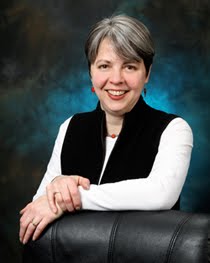 |
| Robin Yess, Incoming Chair of the Ulster County Republican Committee |
Maurice Hinchey Is So 14th Century
About two years ago Congressman Maurice Hinchey proposed to affix price controls to gasoline. This recent example of economic illiteracy is hardly surprising. Polls have consistently found that social democrats have virtually no understanding of economics, which is probably why they are social democrats in the first place. Sadly, this level of ignorance is shared by both parties, both of which supported the "bailout".
The popular image of the Middle Ages is that there was little knowledge about markets and that all of society lived happily on a feudal estate where there was no money and no economy in the modern sense. This claim has been turned into Tönnies's sociological constructs of "gemeinschaft" and "geselleschaft". The gemeinschaft economy supposedly characteristic of the Middle Ages was one governed by organic unity, common beliefs and the like, whereas the geselleschaft economy is more or less the market economy.
It turns out that the vision of the Medieval economy on which Tönnies's constructs were based is wrong. Also, it appears that by the 14th century European monarchs already had better economic understanding than today's Democrats. In other words, there was a practical but likely not a theoretical understanding of how markets work. Fourteenth century monks knew more about economics than my economically illiterate congressman, Maurice Hinchey.
Allow me to quote a passage concerning English history from Joel Kaye's essay "Monetary and Market Consciousness in Thirteenth and Fourteenth Century Europe" which appears on pages 379-80 of Lowry and Gordon's "Ancient and Medieval Economic Ideas and Concepts of Social Justice":
"The clearest witness to this perception among English chroniclers is the author of the Via Edwardi Secundi. Though this chronicle was intended to record the reign of Edward II and his struggles, thoughts about money and prices continually crop up, as if they, in themselves, had historical significance to the writer and his audience.
"In 1315 after the military disaster at Bannockburn and in reaction to a terrible harvest and steeply rising prices, the chronicler records that Parliament, 'looking to the welfare of the state, appointed a remedy for this malady'. Prices on common foodstuffs such as oxen, pigs, sheep and chickens were fixed by law. The next year, 1316, Parliament was forced to reverse itself and cancel the maximum price edicts it had imposed even though the country was still in the grip of a disastrous harvest and rising prices. Here is how the chronicler explains it:
"'The regulations formerly made about food were completely abolished...For as a result of that statute little or nothing was exposed for sale in the markets, whereas formerly there had been an abundant market in goods, though they seemed dear to travelers. But it is better to buy dear than to find in the case of need that there is nothing to be had. For although scarcity of corn raises the price, subsequent plenty will improve the situation.'
"Not only does the author choose to include this particular act of Parliament in his chronicle (when up to this point he mentioned Parliament only briefly and then only when it concerned King Edward), but he sees fit to add his own thoughts on the subject. He notes that goods disappear as the result of price fixing and that high price is preferable to scarcity....
"There is no doubt that a systematic conception of the market as a dynamic, self-regulating system constructed around the instrument of money had long been held among traders and those whose livelihood centered on trade. A glance at the journals of fourteenth-century merchants reveals how sophisticated their understanding of the market had become, and how central this understanding was to every aspect of their activity."
In fact, fourteenth century merchants had greater economic sophistication than social democratic congressmen of 21st century America.
The popular image of the Middle Ages is that there was little knowledge about markets and that all of society lived happily on a feudal estate where there was no money and no economy in the modern sense. This claim has been turned into Tönnies's sociological constructs of "gemeinschaft" and "geselleschaft". The gemeinschaft economy supposedly characteristic of the Middle Ages was one governed by organic unity, common beliefs and the like, whereas the geselleschaft economy is more or less the market economy.
It turns out that the vision of the Medieval economy on which Tönnies's constructs were based is wrong. Also, it appears that by the 14th century European monarchs already had better economic understanding than today's Democrats. In other words, there was a practical but likely not a theoretical understanding of how markets work. Fourteenth century monks knew more about economics than my economically illiterate congressman, Maurice Hinchey.
Allow me to quote a passage concerning English history from Joel Kaye's essay "Monetary and Market Consciousness in Thirteenth and Fourteenth Century Europe" which appears on pages 379-80 of Lowry and Gordon's "Ancient and Medieval Economic Ideas and Concepts of Social Justice":
"The clearest witness to this perception among English chroniclers is the author of the Via Edwardi Secundi. Though this chronicle was intended to record the reign of Edward II and his struggles, thoughts about money and prices continually crop up, as if they, in themselves, had historical significance to the writer and his audience.
"In 1315 after the military disaster at Bannockburn and in reaction to a terrible harvest and steeply rising prices, the chronicler records that Parliament, 'looking to the welfare of the state, appointed a remedy for this malady'. Prices on common foodstuffs such as oxen, pigs, sheep and chickens were fixed by law. The next year, 1316, Parliament was forced to reverse itself and cancel the maximum price edicts it had imposed even though the country was still in the grip of a disastrous harvest and rising prices. Here is how the chronicler explains it:
"'The regulations formerly made about food were completely abolished...For as a result of that statute little or nothing was exposed for sale in the markets, whereas formerly there had been an abundant market in goods, though they seemed dear to travelers. But it is better to buy dear than to find in the case of need that there is nothing to be had. For although scarcity of corn raises the price, subsequent plenty will improve the situation.'
"Not only does the author choose to include this particular act of Parliament in his chronicle (when up to this point he mentioned Parliament only briefly and then only when it concerned King Edward), but he sees fit to add his own thoughts on the subject. He notes that goods disappear as the result of price fixing and that high price is preferable to scarcity....
"There is no doubt that a systematic conception of the market as a dynamic, self-regulating system constructed around the instrument of money had long been held among traders and those whose livelihood centered on trade. A glance at the journals of fourteenth-century merchants reveals how sophisticated their understanding of the market had become, and how central this understanding was to every aspect of their activity."
In fact, fourteenth century merchants had greater economic sophistication than social democratic congressmen of 21st century America.
Sunday, September 5, 2010
Redlich or Republicans for Cuomo (if Paladino Loses)?
If Carl Paladino loses the GOP primary I see three options:
1. Stand down and don't vote for Governor at all
2. Support Warren Redlich, Libertarian Party candidate for governor
3. Join the ranks of Republicans for Cuomo.
Although I do not like Cuomo, in fact I view him as equaling Lazio, I think it is important for the GOP to stop supporting candidates who talk out of both sides of their mouths. Lazio was a paid lobbyist for JP Morgan. But any candidate I support would be thinking about ways of reducing special interests' excessive capture of government. I am puzzled how Lazio could possibly resist providing largess to special interests when he has lobbied for it professionally. As well, the bailout of the banking industry in 2008 was the worst government policy of the past 25 years, yet Lazio was deeply involved in it. Hence, it is difficult to see how he would support policies that are antagonistic to big government given that such expansion has largely been to his own benefit.
Lazio's written policy positions are meaningless because the Republicans have repeatedly claimed to be for smaller government and then expanded government. The policy positions of someone like Lazio have the same weight as the e-mails from Nigeria offering to deposit $10 million in your bank account if you give them the id number. Even big government waster George W. Bush did not say that he was for big government. Rather, he claimed to be for "compassionate conservatism" before passing a massive subsidy to the pharmaceutical industry and advocating increasing restrictions on civil liberties.
The Libertarian candidate, Warren Redlich, posts a piece about Republicans for Cuomo on his blog. Philosophically I agree with Redlich, and do not see a vote for a minor party as throwing one's vote away if there is no viable alternative. But a message needs to be sent to the pathetic New York GOP this year that (a) the bailout was unacceptable; (b) the pattern of Republicans claiming to be for smaller government when they are not is unacceptable; and (c) the in-grown old boy network of Alfonse D'Amato and George Pataki has to be brought down.
Of course, there is still a chance that Paladino, who is outside of New York's pathetic GOP establishment, can still win. Otherwise, it will be a tough choice between Redlich and Cuomo.
1. Stand down and don't vote for Governor at all
2. Support Warren Redlich, Libertarian Party candidate for governor
3. Join the ranks of Republicans for Cuomo.
Although I do not like Cuomo, in fact I view him as equaling Lazio, I think it is important for the GOP to stop supporting candidates who talk out of both sides of their mouths. Lazio was a paid lobbyist for JP Morgan. But any candidate I support would be thinking about ways of reducing special interests' excessive capture of government. I am puzzled how Lazio could possibly resist providing largess to special interests when he has lobbied for it professionally. As well, the bailout of the banking industry in 2008 was the worst government policy of the past 25 years, yet Lazio was deeply involved in it. Hence, it is difficult to see how he would support policies that are antagonistic to big government given that such expansion has largely been to his own benefit.
Lazio's written policy positions are meaningless because the Republicans have repeatedly claimed to be for smaller government and then expanded government. The policy positions of someone like Lazio have the same weight as the e-mails from Nigeria offering to deposit $10 million in your bank account if you give them the id number. Even big government waster George W. Bush did not say that he was for big government. Rather, he claimed to be for "compassionate conservatism" before passing a massive subsidy to the pharmaceutical industry and advocating increasing restrictions on civil liberties.
The Libertarian candidate, Warren Redlich, posts a piece about Republicans for Cuomo on his blog. Philosophically I agree with Redlich, and do not see a vote for a minor party as throwing one's vote away if there is no viable alternative. But a message needs to be sent to the pathetic New York GOP this year that (a) the bailout was unacceptable; (b) the pattern of Republicans claiming to be for smaller government when they are not is unacceptable; and (c) the in-grown old boy network of Alfonse D'Amato and George Pataki has to be brought down.
Of course, there is still a chance that Paladino, who is outside of New York's pathetic GOP establishment, can still win. Otherwise, it will be a tough choice between Redlich and Cuomo.
Saturday, September 4, 2010
A People Gets the Government It Deserves


Although I disagreed with Fraser politically he made an excellent point. Earlier that week I showed him an article about him in the newspaper of the Socialist Workers' Party, the Militant, that was being sold right outside the Columbia main gate. I bought a copy as a goof and there was an article about the guy whose lecture I was about to hear. The Militant didn't like Fraser, nor did Michael Moore, whose film 1988 Roger and Me criticizes the UAW leadership as being too friendly to management. Fraser had stepped down in 1983 (he passed away in 2008).
What kind of government does America deserve? Most of the Republicans I know are unhappy with the way things are going, but are eager to vote for establishment candidates who aim to continue the course. Most of the Americans I know suspect that things have not gone well but do not trouble themselves to question the economic policies of the politicians for whom they vote, returning the same politicians to office who created the policies that caused thing to go the way they are going.
In my town, Olive, NY, a large percentage of Republicans, more than half, refused to sign nominating petitions. Many complained that they did not know anything about the candidates. When I suggested that they attend Town Committee meetings they refused.
Most Americans accept the opinions espoused on television and in their local newspapers, not questioning whether the government that has resulted from those opinions is functioning fairly, competently or liberally. Or, they complain about the way things are but do not trouble themselves to learn about why things are going that way.
When confronted with alternatives, such individuals prefer the tried and true path, true to the trend of a reduction in their standard of living and their freedom. The worst among them are the party activists who assume that the same slop that the GOP has served for the past two decades is just delicious and they definitely intend to serve it again even though it is warmed over for the twentieth time.
A people get the government they deserve. To quote Alfred E. Neumann as my response to Doug Fraser, "What--me worry?"
Wednesday, September 1, 2010
Republican Paradox
Several of my friends support Rick Lazio for Governor of New York State. Lazio had worked as a lobbyist for JP Morgan and had helped arrange Morgan's $25 billion bailout. No greater expansion of government power has occurred in the past two decades. In exchange for his help in facilitating the expansion of government, JP Morgan paid Lazio a one million dollar bonus. In addition, Lazio is on record in support of abortion. As well, Lazio is entrenched in the same self destructive New York GOP that has allowed Alfonse D'Amato to play the GOP against itself in favor of the Democrats. It is the same GOP that continues to support Governor George Pataki, whose last term in office involved expansion of state government, an alliance with the state's Service Employees International Union boss Dennis Rivera and corrupt indifference to extensive Medicaid fraud. These patterns cannot be excused by the State Assembly's Democratic majority or the state's liberal ideology, as even the left-wing New York Times took issue with the criminality in Medicaid that flourished during the Pataki administration.
It is thus puzzling that so many Republicans continue to favor Rick Lazio for governor, the GOP establishment's choice. These Republicans seek an outsider with considerable establishment experience. That is, someone who supports less government but has spent his life earning a living through big government. I would support Paladino if only to keep Lazio out of office, and a candidate who makes a 20% budget cut the centerpiece of his platform is certainly preferable to a paid lobbyist for JP Morgan. Another Pataki-like fraud would simply be too discrediting to the GOP.
The Republicans have grown used to dissonance between words and deeds. The dissonance has become so sharp that the party's image has deteriorated and will not recover until new personnel are introduced at the highest levels. Mr. Pataki and Mr. D'Amato are relics and do not belong in any leadership role. Likewise, candidates such as Michael Bloomberg and Rick Lazio with big government track records need to be purged. There is nothing moderate about the the bailout that Mr. Lazio facilitated. It is not mainstream; it is not "conservative". The bailout was an extreme, self-indulgent, radical expansion of government, a violent taking of money by the powerful from those less powerful, and those participating in it lack the moral fiber to play any prominent role in government.
It is thus puzzling that so many Republicans continue to favor Rick Lazio for governor, the GOP establishment's choice. These Republicans seek an outsider with considerable establishment experience. That is, someone who supports less government but has spent his life earning a living through big government. I would support Paladino if only to keep Lazio out of office, and a candidate who makes a 20% budget cut the centerpiece of his platform is certainly preferable to a paid lobbyist for JP Morgan. Another Pataki-like fraud would simply be too discrediting to the GOP.
The Republicans have grown used to dissonance between words and deeds. The dissonance has become so sharp that the party's image has deteriorated and will not recover until new personnel are introduced at the highest levels. Mr. Pataki and Mr. D'Amato are relics and do not belong in any leadership role. Likewise, candidates such as Michael Bloomberg and Rick Lazio with big government track records need to be purged. There is nothing moderate about the the bailout that Mr. Lazio facilitated. It is not mainstream; it is not "conservative". The bailout was an extreme, self-indulgent, radical expansion of government, a violent taking of money by the powerful from those less powerful, and those participating in it lack the moral fiber to play any prominent role in government.
Subscribe to:
Posts (Atom)


